
Dock Boards / Dock Plates | San Francisco, CA
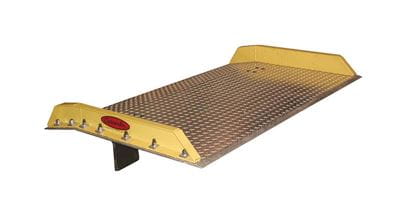
San Francisco businesses can significantly improve warehouse loading dock safety and operational efficiency with properly selected dock boards and dock plates that bridge the gap between dock and truck, and Raymond West's material handling experts are available at (800) 669-5438 to help specify the right solution for your facility's specific load requirements and traffic patterns.
Dock Boards and Dock Plates: Bridging the Gap in San Francisco Loading Operations
The San Francisco Bay Area warehouse landscape has transformed dramatically over the past five years. E-commerce fulfillment demands, tightened delivery windows, and chronic labor constraints have forced facilities to squeeze more throughput from existing infrastructure. That seemingly minor gap between dock and truck bed has become a surprising choke point. In a market where real estate costs make every square foot count and where labor availability fluctuates unpredictably, the right dock leveling solution directly impacts whether your operation runs smoothly or stumbles.
Urban density and the region's aging industrial building stock compound the challenge. Many San Francisco facilities operate in converted structures with non-standard dock heights, while carrier fleets span everything from last-mile delivery vans to 53-foot trailers with varying bed heights. The result: frequent height mismatches that slow loading cycles and create injury risks when crews improvise solutions under pressure.
Dock Board vs Dock Plate: Not Just Terminology
These terms get used interchangeably, but the distinction affects safety and throughput. Dock plates are lighter aluminum units built for hand pallet jacks and lower weight limits. They're portable, quick to reposition, and practical for manual material handling. Dock boards feature welded steel construction with raised curbs designed for forklift traffic and substantially higher load capacities. If your operation relies on sit-down forklifts moving palletized freight, you need dock boards.
Capacity matters immediately. Aluminum dock plates typically handle up to 5,000 pounds, appropriate for manual equipment. Steel dock boards start around 10,000 pounds and extend beyond 20,000 pounds for demanding applications. Choosing equipment mismatched to your actual load creates obvious hazards and shortens service life.
Why Aluminum Dock Plates Benefits Fit Bay Area Flexibility Needs
San Francisco's logistics environment rewards adaptability. Facilities juggle diverse carrier schedules, shift between product lines, and adjust staffing levels based on unpredictable volume spikes. Portable dock plate options deliver flexibility that fixed solutions can't match. Aluminum units weigh between 60 and 80 pounds, light enough for a single operator to reposition across multiple dock doors as loading patterns shift throughout the day.
Aluminum resists corrosion in the Bay Area's humid coastal climate and requires minimal upkeep. For operations handling primarily hand-truck traffic or working across non-adjacent docks, portability and low maintenance translate into real operational advantages. You'll also find that lighter equipment gets deployed consistently, because the physical effort required doesn't tempt crews to skip proper procedure when time pressure mounts.
Steel Dock Boards Capacity for Mechanized Operations
Heavy duty dock boards are essential infrastructure for forklift-dependent operations. The welded steel construction and raised side curbs prevent wheels from rolling off during turns or alignment adjustments. This becomes critical when operators work at the pace e-commerce fulfillment demands. Steel handles repetitive forklift impact without flexing, maintaining structural integrity through thousands of crossings.
Yes, steel units are heavier and less portable than aluminum alternatives. But if your workflow depends on mechanized loading, that weight translates into stability. Forklift dock plate requirements center on capacity and edge protection. Steel dock boards deliver both, making them standard equipment wherever sit-down forklifts cross between dock and trailer.
Loading Dock Safety Equipment Designed for Real-World Use
The most effective dock leveling solutions comparison considers actual deployment, not just specifications. A 200-pound steel unit requiring two people to move may sit idle when staffing runs thin or urgency overrides procedure. Equipment that's physically difficult to position becomes a compliance problem, not a safety solution.
Look for dock plate safety features that encourage proper use: integrated handles positioned away from pinch points, non-slip surfaces that maintain grip in wet conditions, beveled edges that smooth equipment transitions. Yellow safety striping improves visibility in congested loading areas. These practical details determine whether your investment becomes workflow standard or gathers dust in a corner.
Evaluating Mobile Yard Ramp Alternatives and Maintenance Realities
Not every situation requires permanent powered levelers. Dock boards and plates occupy a practical middle ground: more versatile than fixed installations, more robust than improvised solutions, and considerably more economical than hydraulic systems. They address the height variance problem without the capital outlay or maintenance overhead that powered equipment demands.
Dock board maintenance tips are straightforward but necessary. Steel units need periodic inspection for weld integrity and surface wear. Aluminum plates benefit from regular cleaning to preserve traction. Both require ongoing verification that rated capacities match your current equipment mix. Simple maintenance, but it can't be ignored.
Work With Warehouse Loading Dock Equipment Suppliers Who Know the Market
Raymond West serves San Francisco and surrounding Bay Area operations with material handling solutions matched to regional demands. Whether you need guidance selecting aluminum vs steel dock plates for a mixed-traffic facility or help specifying heavy-duty options for high-volume forklift operations, our team provides application knowledge grounded in local operational realities. Contact us to discuss your loading dock challenges and find equipment that fits both your workflow and your budget.
Raymond West's Fremont facility serves all of the Bay Area, including San Francisco, Oakland, San Leandro, Hayward, Union City, Fremont, San Jose, Santa Clara, Mountain View, Palo Alto, Redwood City, San Mateo, South San Francisco, Richmond, Vallejo, Concord, Pleasanton, Livermore and all surrounding areas.
Raymond West | San Francisco Bay Area Material Handling Equipment Supplier
41400 Boyce Rd
Fremont, CA 94538
(800) 675-2500
