
Dock Boards / Dock Plates | Fresno, CA
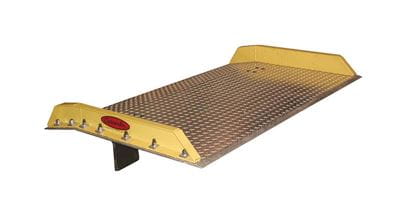
Dock boards and dock plates enable safer, faster loading operations for Fresno warehouses and distribution centers by bridging the gap between dock and trailer, and Raymond West can help you select the right capacity and configuration for your facility at (800) 669-5438.
Evaluating Dock Boards and Dock Plates for Fresno Loading Operations
If you've already decided to address the height gap between your dock and trailer beds, the next question is straightforward: which solution fits your operation? Across the Central Valley, facilities handling agricultural products, food distribution, and manufactured goods face similar loading challenges, but the equipment that works for a cold storage operation near Golden State Boulevard won't necessarily suit a food processing plant in the industrial parks west of Highway 99. Here's how to evaluate your options and match equipment to your actual workflow.
Start With Load Requirements: Dock Board vs Dock Plate
First, clarify what you're moving and how. If your operation relies primarily on hand pallet jacks and lighter electric equipment, aluminum dock plates offer a practical entry point. They handle loads up to 5,000 pounds and one person can reposition them as trailer assignments change throughout the day.
Steel dock boards are built for forklift traffic. They feature raised curbs on both sides to prevent wheels from rolling off during turns or misalignment, and their welded construction handles loads from 10,000 pounds well into the 20,000-pound range. If sit-down forklifts are part of your loading routine, you need a dock board, not a dock plate. The terminology distinction reflects a real difference in structural capacity and application.
Comparing Aluminum vs Steel Dock Plates: Portability vs Durability
Aluminum dock plates benefits show up most clearly in operations that value flexibility. They're light enough for a single operator to move, they won't rust in outdoor or high-humidity environments, and they require minimal upkeep. For Fresno facilities managing multiple dock doors with variable trailer schedules, portable dock plate options let you deploy equipment where it's needed without crew delays or equipment staging.
Steel dock boards provide the structural integrity forklift operations demand. The weight and rigidity prevent flexing under repetitive heavy loads, and the raised curbs guide equipment safely across the transition zone. They're heavier and less portable, but for high-volume mechanized loading, steel is the standard. Consider how often you'll reposition the equipment and whether your crew size supports handling heavier units.
Questions to Ask About Forklift Dock Plate Requirements
What's your actual load profile? Don't just consider today's average pallet weight. Think about your heaviest loads, your busiest shifts, and the equipment mix you're running. A 4,000-pound load on a 5,000-pound-rated aluminum plate leaves little margin for dynamic forces or operator error.
How many dock doors need coverage, and how often do assignments change? If you're rotating equipment between doors throughout the day, a 200-pound steel dock board that requires two people to move creates friction in your workflow. An 80-pound aluminum option gets positioned correctly because the physical effort is manageable.
What's your trailer fleet like? Fresno's position along major north-south distribution corridors means facilities here see a wide variety of carriers and trailer types. If bed height varies significantly across your inbound loads, you'll need equipment that accommodates that range or a mix of solutions for different scenarios.
Dock Plate Safety Features That Support Compliance
The best loading dock safety equipment is equipment your crew actually uses. Look for features that make proper deployment straightforward: welded handles positioned away from pinch points, textured surfaces that maintain traction when wet, beveled edges that smooth the equipment transition. Yellow striping improves visibility in busy dock environments where multiple operators work simultaneously.
Summer heat in the Central Valley can make metal surfaces slick with dust or condensation from refrigerated trailers. Non-slip surfaces and drainage channels aren't optional refinements, they're practical necessities that keep equipment functional across conditions.
Considering Mobile Yard Ramp Alternatives and Dock Leveling Solutions Comparison
Dock boards and plates aren't your only options, but they occupy a practical middle ground. They're more versatile than fixed levelers, more robust than improvised solutions, and considerably less expensive than powered equipment. For operations with straightforward loading patterns and modest budgets, they're often the right fit.
Heavy duty dock boards require periodic inspection for weld integrity, surface wear, and capacity verification as your equipment evolves. Aluminum units benefit from occasional cleaning to maintain traction. Straightforward maintenance, but it needs to happen on schedule.
Work With Warehouse Loading Dock Equipment Suppliers Who Know the Market
Raymond West serves Fresno and Central Valley operations with material handling solutions matched to regional demands. Whether you need help comparing steel dock boards capacity options for high-volume forklift operations or guidance selecting portable aluminum units for a multi-door facility, our team provides application knowledge, not just spec sheets. Reach out to discuss your loading challenges and explore dock board maintenance tips and equipment that fits your workflow and budget.
Raymond West's Fresno facility serves much of the Central Valley, including Fresno, Clovis, Madera, Visalia, Tulare, Lindsay, Hanford, Lemoore, Los Banos, Santa Nella, Dos Palos, Firebaugh, Kettleman City, Coalinga, Avenal, Mendota, Kerman, San Joaquin, and all surrounding areas.
Raymond West | Fresno Material Handling Equipment Supplier
2935 S Elm Ave #101
Fresno, CA 93706
(559) 264-7500
