
Dock Boards / Dock Plates | Stockton, CA
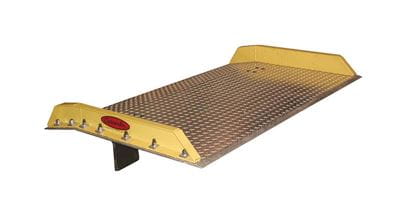
Dock boards and dock plates enable Stockton businesses to bridge the gap between warehouse floors and truck beds safely and efficiently, reducing loading accidents while accelerating dock turnaround times, so contact Raymond West at (800) 669-5438 to find the right solution for your operation's specific load capacities and traffic patterns.
Loading Dock Bottlenecks Slow Stockton Distribution: Choosing the Right Dock Equipment
When your third-shift crew is racing to turn trailers before the morning pickup window closes, a six-inch gap between dock and truck bed becomes more than an inconvenience. It's a throughput killer. Stockton facilities positioned along the I-5 and Highway 99 corridors move high volumes between Northern California distribution networks and Central Valley agricultural logistics. That pace demands dock equipment you can deploy quickly, trust completely, and match precisely to your load profile. Yet many operations default to whatever's available rather than what actually fits the application.
Dock Board vs Dock Plate: The Distinction That Protects Your Operation
These terms aren't interchangeable, though they're often treated that way. A dock plate is a lighter aluminum unit built for hand pallet jacks and modest loads. It's portable, one-person deployable, and suited to manual material handling scenarios. A dock board is a welded steel platform with raised curbs designed to guide and contain forklift traffic under heavier loads. If sit-down forklifts cross that gap regularly, you need the structural integrity and lateral guidance of a dock board.
Capacity differences are substantial. Aluminum dock plates typically max out around 5,000 pounds, appropriate for walkie-riders and light electric jacks. Steel dock boards begin around 10,000 pounds and scale past 20,000 for heavy-duty applications. Choosing equipment rated below your actual loads doesn't just risk catastrophic failure. It accelerates fatigue, compromises stability, and introduces flexing that operators feel and react to, usually by slowing down or working around the equipment entirely.
Aluminum Dock Plates Benefits: When Portability Solves the Problem
Aluminum options shine in facilities where flexibility matters more than maximum capacity. A 70-pound aluminum dock plate can be repositioned by a single operator across multiple dock doors without mechanical assistance. That responsiveness matters in Stockton's diverse logistics environment, where you might handle beverage distribution in the morning and retail consolidation by afternoon. Aluminum resists corrosion in outdoor or unconditioned spaces and requires little beyond occasional cleaning to maintain traction surfaces.
Portable dock plate options work best when your operation relies on hand trucks, pallet jacks, or light-duty walkie stackers. They're economical, low-maintenance, and remove barriers to compliance because they're physically easy to deploy correctly every time.
Steel Dock Boards Capacity: Built for Mechanized Traffic
Forklift operations demand steel. The raised curbs on heavy duty dock boards prevent wheels from drifting off-edge during turns or misalignment, a critical safety feature when operators move at operational speed. Steel construction absorbs the repetitive impact of loaded forklifts without flexing or developing stress fractures. While these units weigh significantly more and sacrifice portability, they're the only appropriate choice for mechanized loading environments.
When evaluating forklift dock plate requirements, match your heaviest anticipated load plus a safety margin, then verify the equipment's structural design supports that rating under dynamic conditions, not just static weight tests. A dock board rated for 15,000 pounds should handle a 12,000-pound load moving across it at normal fork speed without deflection.
Loading Dock Safety Equipment That Fits Your Workflow
The most robust dock leveling solution is worthless if your crew bypasses it. A 200-pound steel unit requiring two people and a forklift to reposition often sits idle when urgency or short staffing override procedure. Aluminum alternatives weighing under 80 pounds get used consistently because the physical effort required matches the pace of operations.
Look for dock plate safety features designed around real-world handling: welded grab handles positioned away from pinch points, textured surfaces that grip in wet conditions, and beveled transition edges that don't catch wheels or cause jarring. High-visibility yellow striping helps in dimly lit or cluttered dock areas. These practical details determine whether equipment becomes standard practice or a compliance checkbox that's routinely ignored.
Dock Board Maintenance Tips and Mobile Yard Ramp Alternatives
Not every loading scenario justifies a permanent leveler installation. Mobile yard ramp alternatives address height differentials but at different price points and operational profiles. Dock boards and plates occupy practical middle ground: more versatile than fixed systems, more durable than improvised solutions, and far more economical than powered leveling equipment.
Maintenance requirements are straightforward but non-negotiable. Steel units need periodic inspection for weld integrity, surface wear, and curb damage. Aluminum plates benefit from cleaning to preserve traction. Both require ongoing verification that rated capacities still match your evolving equipment mix and load profiles.
Partner With Loading Dock Equipment Suppliers Who Understand Regional Demands
Raymond West serves Stockton and throughout California with material handling solutions tailored to the operational realities of high-velocity distribution networks. Whether you need guidance on aluminum vs steel dock plates for a multi-door facility or help specifying heavy duty dock boards for continuous forklift traffic, our team provides application knowledge grounded in how this equipment actually performs under pressure. Contact us to discuss your loading dock challenges and identify equipment that supports both your throughput targets and safety standards.
Raymond West's Stockton facility serves much of the northern Central Valley, including Stockton, Lathrop, Lodi, Tracy, Modesto, and Merced.
Raymond West | Stockton Material Handling Equipment Supplier
19107 Christopher Way
Lathrop, CA 95330
(800) 675-2500
