
Dock Boards / Dock Plates | Orange County, CA
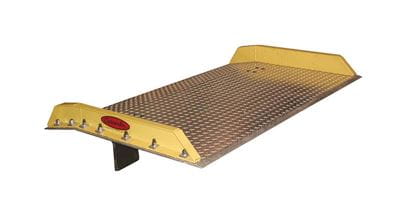
Dock boards and dock plates streamline loading operations for Orange County warehouses by bridging height gaps safely and efficiently, reducing turnaround times and improving worker safety, contact Raymond West at (800) 669-5438 to identify the right capacity and design for your facility's specific dock configurations.
Evaluating Dock Boards and Dock Plates for Orange County Loading Operations
If you're tasked with improving loading dock efficiency in Orange County, you've likely recognized that the gap between dock and trailer bed isn't a minor inconvenience. It's a throughput constraint, a safety liability, and a source of product damage. With the region's position as a critical node between the Ports of Los Angeles and Long Beach and inland distribution networks, any delay at the dock reverberates through your supply chain. Before you specify dock boards or dock plates, you need to ask the right questions about capacity, portability, and how your team will actually use the equipment.
Start by Understanding Dock Board vs Dock Plate Differences
These aren't interchangeable terms, and the distinction determines whether your solution holds up under real-world conditions. Dock plates are lighter aluminum units built for hand pallet jacks and modest loads, typically up to 5,000 pounds. They're portable enough for one person to reposition and work well for operations relying on manual material handling. Dock boards are welded steel structures with raised curbs, engineered to support forklift traffic and loads exceeding 10,000 pounds, often well into the 20,000-pound range for heavy-duty models.
Ask yourself what equipment crosses that gap. If you're running sit-down forklifts with full pallets, aluminum dock plates won't cut it. You need steel dock boards with the structural integrity to handle repetitive impact and the side curbs that keep wheels from slipping during turns or misalignment. Mismatching equipment to application accelerates wear and creates avoidable risk.
Weigh Aluminum vs Steel Dock Plates Based on Real Workflow
Aluminum dock plates bring genuine advantages when portability and flexibility matter. They resist corrosion in coastal Orange County environments, require minimal upkeep, and weigh between 60 and 80 pounds, manageable for a single operator. If your facility handles frequent trailer changes across multiple dock doors with predominantly hand-truck or light electric jack traffic, portable dock plate options deliver practicality without demanding two-person crews or forklift assistance for positioning.
Steel dock boards are the standard for mechanized operations. The raised curbs aren't cosmetic, they prevent forklift wheels from rolling off the edge during the alignment adjustments that happen constantly in high-volume environments. Steel construction absorbs the repetitive shock of forklift crossings without flexing. Yes, they're heavier and less portable, but for operations pushing palletized freight through dock doors all day, steel dock boards provide the durability and safety margin the application demands.
Evaluate Dock Plate Safety Features That Encourage Compliance
The most effective loading dock safety equipment is the equipment your crew actually deploys. A 200-pound steel dock board that requires two people and forklift handling to move might sit idle when staffing is tight or when urgency overrides procedure. Consider whether the physical demands of positioning the equipment will become a barrier to consistent use.
Look for design details that reinforce safe operation: welded handles positioned to keep fingers away from pinch points, non-slip surfaces that maintain traction when wet, and beveled edges that smooth the transition for wheeled equipment. Yellow safety striping improves visibility in congested dock areas. These aren't minor touches, they determine whether the equipment integrates into workflow or becomes a compliance checkbox that gets skipped under pressure.
Compare Dock Leveling Solutions Alongside Mobile Yard Ramp Alternatives
Dock boards and plates occupy a practical middle ground. They're more versatile than fixed levelers, considerably more economical than powered systems, and far more reliable than improvised solutions. Mobile yard ramp alternatives address similar challenges but with different cost structures and operational profiles. Understanding forklift dock plate requirements helps clarify where simpler equipment suffices and where you need more robust infrastructure.
Don't overlook dock board maintenance tips during evaluation. Steel units need periodic inspection for weld integrity and surface wear, especially in high-traffic applications. Aluminum plates benefit from occasional cleaning to preserve traction. Both require verification that weight capacity ratings still match your equipment mix as your fleet evolves. Straightforward maintenance, but someone needs to own it.
Work With Warehouse Loading Dock Equipment Suppliers Who Know the Region
Raymond West serves Orange County operations with material handling solutions tailored to Southern California's unique logistics environment. Whether you need guidance comparing heavy duty dock boards for high-volume forklift operations or help selecting portable aluminum options for a flexible multi-door facility, our team brings application knowledge grounded in real-world conditions. Reach out to discuss your loading dock challenges and explore equipment that fits your workflow and budget.
Raymond West's Orange County facility serves Anaheim, Costa Mesa, Fullerton, Garden Grove, Orange, Santa Ana, Tustin and all surrounding areas.
Raymond West | Orange County Material Handling Equipment Supplier
5560 Katella Ave
Cypress, CA 90630
(562) 944-8067
