
Warehouse Safety Equipment | Orange County, CA

Warehouse safety equipment from experienced Material Handling Equipment providers in Orange County, CA helps businesses reduce workplace incidents, improve OSHA compliance, and protect both personnel and inventory investments, so contact Raymond West at (800) 669-5438 to discuss tailored solutions for your operation.
How to Evaluate Essential Warehouse Safety Equipment in Orange County, CA
If you're assessing warehouse safety equipment for an operation in Orange County, you're likely responding to a compliance review, a near-miss incident, or simply the recognition that your current setup doesn't match the pace of activity on your floor. With the density of distribution centers along the I-5 corridor and proximity to the Ports of Los Angeles and Long Beach, facilities here handle high throughput under constant pressure. That operational tempo makes proper safety equipment more than regulatory protection, it's what keeps your operation moving when accidents could otherwise force a shutdown.
The evaluation process begins with understanding what you're actually protecting against. Start by walking the floor during peak activity. Note where forklifts cross pedestrian paths, where overhead rack beams present clearance concerns, and where noise levels or material handling create exposure. The right warehouse safety equipment addresses those specific conditions, not a generic checklist.
Assessing PPE: Match Protection to Actual Exposure
Personal protective equipment should correspond directly to the hazards workers encounter. Hard hats are essential in facilities with multi-level racking or overhead conveyors where falling objects present real risk. Safety glasses protect against debris from pallet breakage or dust in high-velocity air handling zones. If your warehouse handles chemicals or cleaning agents, face shields and chemical-resistant gloves become necessary rather than optional.
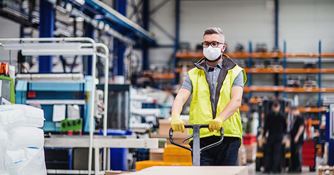
High-visibility vests matter most in environments where forklift operators share space with warehouse staff performing picking, packing, or staging tasks. Evaluate sight lines in your aisles and around dock doors. If drivers can't reliably spot pedestrians during turns or in dim areas of your warehouse, visibility gear is non-negotiable.
Footwear is another area where specificity counts. Steel-toed boots safeguard against pallet drops and contact with heavy machinery, but slip-resistant soles are equally important if your operation involves temperature-controlled zones where condensation accumulates or areas prone to spill. Ask what your team is actually standing on and moving through, then choose proper footwear accordingly.
Hearing Protection and Long-Term Health Considerations
Noise levels in busy warehouses often exceed thresholds that require hearing protection. Forklift alarms, conveyor systems, dock activity, and pneumatic equipment contribute to sustained exposure that can lead to hearing loss over time. Earplugs and earmuffs are straightforward, low-cost solutions, but you'll need to ensure they don't interfere with communication or situational awareness. Test options with your warehouse workers before committing to a facility-wide rollout.
Facility-Level Safety Equipment: Barriers, Signage, and Controls
Warehouse PPE protects individuals. Facility equipment protects the workspace and reduces the risk of accidents at a systemic level. Guardrails and safety barriers separate walkways from active forklift zones, creating physical separation that helps prevent injury when human judgment or visibility fails. Bollards protect pallet rack uprights and structural columns from impact damage that could compromise load capacity or create a collapse hazard.
Signage and floor marking define traffic flow, hazard zones, and emergency exits. Reflective tape on aisle edges and around machinery improves visibility during evening or early morning shifts. Proper markings also support OSHA-compliant flue space around racks and beam-level clearances, which matter during inspections and audits.
First aid kits should be well-stocked and accessible, not buried in a supervisor's office. Fire safety equipment, including extinguishers and suppression systems, must be positioned based on the materials you store and the layout of your operation. If you handle hazardous substances, fume extraction, proper ventilation, and spill containment kits become essential parts of your safety infrastructure.
Site-Specific Risk Assessment: What to Look For
Every warehouse has different risks. A facility focused on pallet movement and forklift-intensive workflows prioritizes impact protection, visibility, and traffic control. Operations dealing with hazardous materials require eye protection, respiratory equipment, and chemical-resistant gear. High-rack environments demand attention to overhead clearance and falling object risks.
Conduct a site walk with your safety team and frontline supervisors. Identify where workers are exposed to moving parts, where machinery operates in close proximity to people, and where environmental factors like ventilation or lighting create additional hazards. Match proper safety equipment to those exposures rather than adopting a generic standard.
Seasonal volume surges common in Southern California distribution hubs can strain both equipment and staff. Higher throughput increases forklift traffic, tighter staging areas raise the risk of injury from congestion, and extended shifts reduce attention to workplace hazards. Build flexibility into your safety strategy so you can scale protection when operational intensity increases.
Partnering with a Local Provider Who Understands Your Environment
Evaluating warehouse safety equipment is more effective when you work with a partner who understands the operational realities of Orange County facilities. Raymond West serves warehouses throughout the region, offering site assessments, product recommendations, and ongoing support that aligns safety gear with the way your team actually works. Proper equipment, properly matched, helps warehouse staff stay safe while maintaining the productivity your operation depends on.
Contact Raymond West in Orange County to schedule an assessment and identify the essential safety solutions that fit your facility's specific risks and workflow demands.
```Raymond West's Orange County facility serves Anaheim, Costa Mesa, Fullerton, Garden Grove, Orange, Santa Ana, Tustin and all surrounding areas.
Raymond West | Orange County Material Handling Equipment Supplier
5560 Katella Ave
Cypress, CA 90630
(562) 944-8067
You May Also Like:
Covid 19 Safety Products | Orange County
Raymond West is a California material handling equipment company, offering a full range of warehouse safety products for Covid 19.
Learn More

Fall Protection | Orange County
Prevent warehouse accidents with state-of-the art fall protection solutions from Raymond West.
Learn More
