
Dock Boards / Dock Plates | Portland, OR
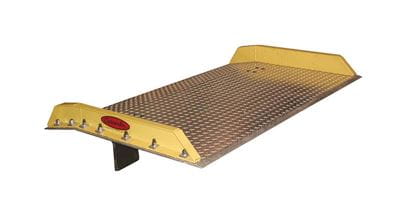
Portland warehouse operators can reduce loading dock accidents and improve throughput with properly specified dock boards and plates engineered for their vehicle fleet and workflow patterns, so contact Raymond West at (800) 669-5438 to discuss solutions that match your operational requirements.
Dock Boards and Dock Plates: What Portland Warehouses Learn After the First Installation
Most Portland operations discover the real differences between dock boards and dock plates after they've already made a purchase. The 60-pound aluminum plate that seemed perfect in the catalog turns out to be wildly inadequate when your forklift operator tries to load a full pallet onto a reefer trailer. Or the heavy-duty steel dock board you invested in sits against the wall because your crew can't easily reposition it across six dock doors during peak shipping windows.
Here's what typically happens during implementation and how to avoid the most common missteps.
The Terminology Confusion That Costs Operations Real Money
Understanding dock board vs dock plate isn't academic. It's the difference between equipment that works and equipment that gets bypassed. Dock plates are aluminum units built for hand pallet jacks and lighter electric equipment, usually topping out around 5,000 pounds capacity. They're portable enough for one person to move and reposition.
Dock boards are steel, feature raised curbs on both sides, and handle forklift traffic starting at 10,000 pounds and extending past 20,000 pounds for heavy-duty applications. Those curbs aren't cosmetic. They keep forklift wheels from rolling off the edge when operators angle across the transition or make corrections mid-crossing.
The mistake happens when purchasing decisions prioritize price or portability without mapping equipment to actual use. If sit-down forklifts move your freight, you need steel dock boards with appropriate weight capacity. Trying to save money with portable dock plate options in a forklift environment creates safety exposure and equipment failure.
Aluminum vs Steel Dock Plates: Real Tradeoffs in Pacific Northwest Conditions
Portland's wet climate and proximity to the Port of Portland mean many facilities handle both containerized import freight and regional distribution across varying schedules. Aluminum dock plates benefits become clear in multi-door operations where flexibility matters. They resist corrosion during wet months, one person can reposition them quickly, and maintenance requirements stay minimal.
Steel dock boards capacity makes them non-negotiable for mechanized operations. Forklift dock plate requirements aren't suggestions. The repeated impact of loaded lifts moving at operational speed demands structural integrity that only welded steel provides. Steel also handles the scraping, pivoting, and occasional misalignment that happens in real-world loading environments.
What gets overlooked: weight impacts adoption. A 200-pound steel unit that takes two people and planning to move often stays put even when it's needed at another door. Crews improvise or skip the equipment entirely. If your operation runs lean or handles unpredictable door assignments, factor handling reality into your choice.
Loading Dock Safety Equipment Decisions That Reflect Actual Workflow
The best dock leveling solutions comparison isn't feature lists. It's asking whether your crew will consistently use the equipment during second shift, during peak season, and when you're short-staffed. Safety features matter most when they reduce friction rather than add steps.
Look for non-slip surfaces that maintain traction when Portland rain blows into open docks. Welded handles should allow secure grip without putting hands near pinch points during positioning. Beveled edges ease the transition for pallet jacks and reduce the jarring impact when forklifts cross. Yellow safety striping improves visibility in dim conditions or when working fast.
Dock board maintenance tips from the field: inspect welds and walking surfaces quarterly, verify that capacity ratings still match your heaviest equipment, and replace units showing surface wear before traction degrades. This isn't complicated, but it needs a schedule.
Mobile Yard Ramp Alternatives and Where Dock Boards Fit
Dock boards and plates solve a specific problem: bridging the gap and height variance between dock and trailer bed. They're more versatile than permanent levelers, far more robust than improvised ramps, and considerably less expensive than powered systems. For operations handling diverse carrier fleets or frequent trailer swaps, they occupy the practical middle ground.
When evaluating warehouse loading dock equipment, match the solution to load frequency and equipment type. High-volume forklift operations justify heavy duty dock boards with appropriate capacity and structural reinforcement. Facilities primarily using pallet jacks benefit from aluminum's portability and corrosion resistance. Mixed operations may need both, assigned strategically across doors based on typical use patterns.
Working With Loading Dock Equipment Suppliers Who've Seen These Installations Before
Raymond West serves Portland and the broader Pacific Northwest with material handling solutions grounded in local operational realities. Whether you're comparing steel dock boards capacity for a high-throughput distribution center or need portable aluminum options for a facility with fluctuating door assignments, we help you match equipment to actual workflow. Reach out to discuss what your loading operation really needs and avoid the costly do-over many facilities experience.
Raymond's Portland service operation includes all of Western Oregon and Southwest Washington, including Portland, Beaverton, Tigard, Hillsboro, Forest Grove, Sherwood, Tualatin, Wilsonville, Oregon City, Gladstone, Clackamas, Milwaukie, Happy Valley, Gresham, Troutdale, Woodburn, Salem, Vancouver, Ridgefield, Longview, Kelso and surrounding areas.
Raymond West | Portland Material Handling Equipment Supplier
3148 NE 181st Ave
Portland, OR 97230
(800) 675-2500
