
Dock Boards / Dock Plates | Riverside, CA
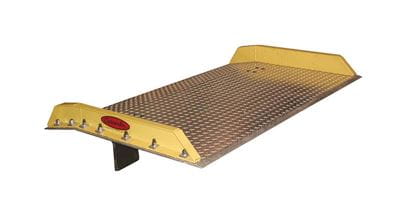
Dock boards and dock plates enable Riverside, CA warehouses and distribution centers to safely bridge the gap between loading docks and truck beds while supporting heavy forklift traffic and improving loading efficiency, and Raymond West at (800) 669-5438 can help you select the right capacity and configuration for your operation.
Dock Boards and Dock Plates: Bridging the Gap in Riverside Loading Operations
Riverside sits at the nexus of the Inland Empire's sprawling distribution network, where Interstate 10 and State Route 60 funnel freight between the San Bernardino and Los Angeles basins. Facilities here juggle trailer traffic from the Ports of Los Angeles and Long Beach alongside regional LTL carriers serving the Southwest corridor. That constant churn of inbound and outbound shipments means loading docks work harder than most, and the gap between dock and truck bed becomes a chokepoint that compounds throughout the shift. Dock boards and dock plates bridge that gap, but the equipment you choose determines whether your operation stays fluid or bottlenecks when trailer heights vary across a diverse carrier mix.
Dock Board vs Dock Plate: A Distinction That Shapes Safety and Throughput
The terminology matters more than it sounds. Dock plates are lightweight, typically aluminum units built for hand pallet jacks and modest load weights. They're easy to reposition and work well for operations relying on manual material handling. Dock boards are heavier, welded steel structures with raised curbs on both sides, engineered to withstand forklift traffic and significantly heavier loads. If your Riverside warehouse moves palletized freight with sit-down forklifts, a dock board is what you need. A dock plate won't hold up.
Weight capacity separates these two categories in practical terms. Aluminum dock plates generally handle loads up to 5,000 pounds, suitable for electric pallet jacks and light-duty equipment. Steel dock boards start around 10,000 pounds and extend beyond 20,000 pounds for heavy-duty applications. Choosing the wrong equipment for your load profile creates safety risks and accelerates wear that turns predictable maintenance into surprise replacements.
Aluminum vs Steel Dock Plates: Matching Equipment to Workflow Demands
Aluminum dock plates deliver flexibility for operations that need to shift equipment across multiple dock doors throughout the day. They're light enough for a single operator to move, they resist corrosion in Southern California's dry climate, and maintenance stays minimal. For Riverside facilities handling frequent trailer swaps with predominantly hand-truck traffic, portable dock plate options offer both economy and practicality without sacrificing performance.
Steel dock boards provide the structural backbone needed when forklifts cross the threshold repeatedly under load. The welded curbs keep wheels centered even when operators angle into a turn or manage awkward freight configurations. Steel construction absorbs the repetitive impact of mechanized traffic without flexing or developing stress points. While they're heavier and less portable, steel dock boards remain the industry standard when forklift operations define your loading process.
Loading Dock Safety Equipment Built for Real-World Compliance
The most effective dock leveling solution is the one your crew actually uses. That means factoring in real handling demands. A 200-pound steel dock board requiring two people to position may get skipped when staffing runs lean or urgency overrides protocol. Aluminum options weighing 60 to 80 pounds get deployed consistently because the physical effort doesn't become a barrier to compliance.
Focus on dock plate safety features that support correct use: welded handles positioned to keep hands away from pinch points, textured surfaces that maintain traction when trailers track in dust from Riverside's surrounding logistics corridors, and beveled edges that smooth equipment transitions. Yellow safety striping improves visibility during high-volume periods. These practical design elements determine whether the equipment integrates into workflow or becomes a step operators shortcut under pressure.
Heavy Duty Dock Boards and When Simpler Solutions Make Sense
Not every loading scenario justifies a permanent dock leveler installation. Mobile yard ramp alternatives solve similar problems but carry different cost structures and operational trade-offs. Dock boards and plates occupy a practical middle tier: more adaptable than fixed levelers, more durable than improvised workarounds, and considerably more cost-effective than powered systems.
When comparing warehouse loading dock equipment, consider dock board maintenance requirements as part of total cost. Steel units need periodic checks for weld integrity and surface wear, especially in high-volume environments. Aluminum plates benefit from occasional cleaning to preserve traction surfaces. Both require verification that rated capacities still align with your current equipment mix as forklifts or load profiles change. The maintenance isn't complicated, but it needs to stay on schedule.
Partner With Loading Dock Equipment Suppliers Who Know Inland Empire Operations
Raymond West serves Riverside and the broader Southern California logistics community with material handling solutions tailored to regional operational realities. Whether you need guidance comparing forklift dock plate requirements for high-throughput cross-dock operations or help selecting portable aluminum options for a multi-door distribution facility, our team applies practical application knowledge beyond basic product specs. Reach out to discuss your loading dock challenges and explore equipment that fits your workflow and your budget.
Raymond West's Riverside service area includes Redlands, Colton, Rialto, Bloomington, Moreno Valley, Hemet, Perris, Lake Elsinore, Menifee, Coachella Valley and all surrounding areas.
Raymond West | Riverside Material Handling Equipment Supplier
Riverside, CA
(951) 384-2444
