
Dock Boards / Dock Plates | Santa Barbara, CA
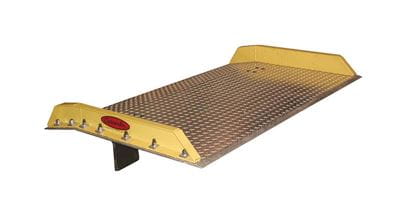
Santa Barbara businesses can improve loading dock safety and efficiency with properly specified dock boards and dock plates that bridge the gap between warehouse floors and truck beds, and Raymond West at (800) 669-5438 can help you select the right capacity and configuration for your operation.
Santa Barbara Loading Dock Equipment: What Actually Happens During Dock Plate and Dock Board Implementation
If you're managing warehouse operations along the California coast between Ventura and San Luis Obispo, you've likely watched crews improvise around dock-to-trailer gaps more times than you'd prefer. The gap isn't theoretical: it stalls throughput, creates forklift bottlenecks, and generates safety incidents during peak season when produce, wine shipments, and distribution traffic intensify. Understanding what dock board and dock plate adoption looks like in practice helps you avoid the common mistakes that turn a simple bridging solution into a drawn-out headache.
Common Deployment Mistakes: Lessons From the Field
The most frequent error isn't choosing between aluminum dock plates benefits and steel dock boards capacity, it's ordering equipment before mapping how your crew will actually handle it. A facility near the waterfront recently purchased heavy duty dock boards perfectly rated for their forklift fleet, then discovered their team couldn't reposition 180-pound units quickly enough during trailer swaps. The equipment sat idle while crews reverted to unsafe workarounds.
Start by observing real-world patterns. How often do trailers change at each door? Who's available to position equipment during shift transitions? Do you handle hand pallet jacks exclusively at certain docks, or does forklift traffic dominate across all positions? Portable dock plate options make sense for mixed-use environments with frequent changes. Steel dock boards with side curbs become non-negotiable where sit-down forklifts operate at speed.
Dock Board vs Dock Plate: Getting the Specification Right
The terminology confusion creates more problems than it should. Dock plates are aluminum units typically handling up to 5,000 pounds, designed for hand trucks and light electric pallet jacks. One person can move them, they resist coastal humidity and salt air, and they work well for operations prioritizing flexibility. Dock boards feature welded steel construction, raised curbs, and capacities starting around 10,000 pounds extending past 20,000 pounds for heavy-duty applications.
If forklifts cross the gap, you need dock boards. The curbs prevent wheels from slipping during turns or misalignment. Aluminum vs steel dock plates becomes the wrong comparison when the application requires structural integrity under repetitive impact. Match the equipment category to your material handling method before debating material choices.
What to Expect During the First Two Weeks
Even well-matched loading dock safety equipment faces adoption friction. Operators accustomed to eyeballing gaps or using improvised ramps need time to integrate new steps into their routine. Plan for this. Position equipment within easy reach of every active dock door. Mark storage locations clearly. Run a brief walkthrough showing proper placement, not just a safety talk listing rules.
Watch for workarounds during the second week. If crews avoid using the equipment, the problem is usually logistical, not attitudinal. Maybe the dock plate safety features make it awkward to store. Perhaps the weight exceeds what one person can comfortably reposition during solo shifts. Address these friction points immediately, or the equipment becomes expensive floor clutter.
Forklift Dock Plate Requirements and Capacity Verification
Your forklift nameplate shows combined vehicle and load weight. Add those figures and apply a margin, dynamic loading during acceleration or uneven trailer floors increases effective weight. Don't assume a 5,000-pound rating handles a 4,800-pound load comfortably. It doesn't. Steel construction with appropriate capacity prevents flexing that creates instability and accelerates equipment fatigue.
For operations considering mobile yard ramp alternatives as a dock leveling solutions comparison, recognize the trade-offs. Ramps address height differences but require more space and cost significantly more. Dock boards occupy the practical middle: more robust than improvised solutions, more economical than powered levelers, and simple enough that training takes minutes instead of hours.
Dock Board Maintenance Tips and Long-Term Performance
Inspect welds and hinge points monthly. Surface wear patterns reveal misalignment or capacity issues before failure occurs. Aluminum units benefit from periodic cleaning to maintain traction, coastal moisture combined with forklift tire residue creates surprisingly slick surfaces. Steel dock boards need attention to any paint damage that exposes bare metal to humid air.
Santa Barbara's moderate climate reduces some wear factors but intensifies others. Salt air accelerates corrosion on unprotected steel. Seasonal agricultural and wine industry peaks create concentrated usage periods that test equipment harder than steady year-round volume. Plan maintenance around these patterns.
Work With Warehouse Loading Dock Equipment Suppliers Who Know Local Demands
Raymond West serves Santa Barbara and surrounding California operations with material handling solutions matched to coastal and agricultural distribution demands. Whether you need guidance on heavy-duty capacity for forklift-intensive operations or help selecting portable aluminum options for multi-use facilities, our team brings practical deployment experience. Reach out to discuss your loading dock challenges and explore equipment that actually gets used.Raymond West's Santa Barbara County service area includes Buellton, Carpinteria, Goleta, Lompoc, Santa Barbara, Santa Maria and all surrounding areas.
Raymond West | Santa Barbara Material Handling Equipment Supplier
Santa Barbara County, CA
(805) 749-2777
