Warehouse Safety Equipment | Boise, ID

Warehouse safety equipment providers in Boise, ID deliver integrated solutions that protect workers, reduce liability exposure, and maintain operational efficiency through proper forklift restraints, dock safety systems, protective barriers, and compliance-ready personal protective equipment, contact Raymond West at (800) 669-5438 to assess your facility's current safety infrastructure and identify cost-effective improvements.
Essential Warehouse Safety Equipment for Boise Facilities: Protecting Workers and Operations
Boise's industrial footprint continues expanding along the I-84 corridor, where distribution centers supporting both regional retail and high-value tech manufacturing create distinct challenges. Facilities serving regional grocers face cold-storage transitions and temperature differentials that create slip hazards. Warehouses supporting Micron and other semiconductor operations handle clean-room protocols alongside heavy pallet movement. These operational realities mean warehouse safety can't rely on generic solutions. Equipment selection needs to match the actual hazards your team encounters.
Warehouse safety equipment serves as functional infrastructure, not decoration. When properly selected, PPE and protective systems reduce the risk of accidents while supporting normal workflow. The payoff isn't just regulatory compliance. It's fewer disruptions, lower insurance premiums, and staff who can concentrate on productivity instead of navigating preventable risks.
Core Safety Equipment: Building the Foundation
Personal protective equipment begins with head protection. Hard hats safeguard warehouse workers from falling inventory, contact with pallet rack beams, or accidental impact in tight aisles. The essential warehouse starts here, particularly in facilities with high-bay racking where overhead hazards increase.
Eye and face protection matters across different tasks. Safety glasses shield against airborne dust and debris common in high-velocity operations. Face shields provide broader coverage when handling hazardous materials or operating machinery that generates splash or fume exposure. In warehouses processing chemicals or industrial components, proper eye protection isn't optional.
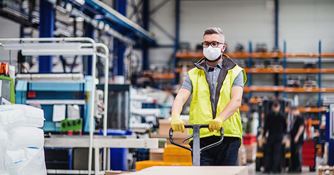
High-visibility vests keep workers visible to forklift operators, especially during Boise's shorter winter days when natural light through dock doors drops off early. Visibility becomes essential in facilities running multiple shifts or managing congested staging areas where pedestrian and equipment paths intersect.
Footwear often gets overlooked until someone drops a pallet. Steel-toed boots protect against crush injuries from heavy machinery and provide slip-resistant soles that help prevent falls on surfaces affected by moisture or temperature changes. Proper footwear is a basic safeguard that addresses risks in every warehouse.
Hearing Protection and Respiratory Safety
Sustained noise levels above 85 decibels demand hearing protection. Forklift alarms, conveyor systems, and dock activity create prolonged exposure that leads to hearing loss over time. Earplugs or earmuffs offer inexpensive protection without interfering with communication when workers need to stay coordinated.
Warehouses handling manufacturing inputs or chemical products require attention to air quality. Proper ventilation reduces risks associated with fume accumulation. When ventilation alone isn't sufficient, respiratory protection becomes essential PPE for workers in potentially hazardous zones.
Facility-Level Protection: Barriers, Racks, and Environmental Controls
Warehouse PPE protects individuals. Structural safety equipment protects the workspace and everyone in it. Safety barriers and guardrails separate pedestrian walkways from active forklift traffic, creating defined zones that reduce the risk of injury from accidental contact or equipment movement.
Pallet rack systems require proper setup and maintenance. Uprights must withstand repeated contact without compromising load capacity. Bollards protect rack columns and building infrastructure in high-traffic areas where tight turns increase collision probability. Beam capacity should match actual loads, and flue space requirements must remain clear to prevent fire hazards and maintain structural integrity.
Signage provides constant communication. Reflective floor marking defines aisles and staging zones. Hazard warnings identify areas requiring specific PPE or restricted access. Emergency exit paths need clear visibility from all areas of your warehouse, ensuring quick egress if fire suppression systems activate or other emergencies develop.
First aid stations should be well-stocked and placed near high-activity zones. Fire safety equipment, including compliant extinguishers, must be accessible and regularly inspected. Facilities managing chemicals need spill containment kits and eyewash stations positioned where they're most likely needed.
Matching Equipment to Operational Hazards
Every warehouse faces unique risks. Operations focused on heavy pallet movement prioritize impact protection and load stability. Facilities handling electronics or pharmaceuticals may require chemical-resistant gloves, ESD-safe gear, and controlled environment protocols. Forklift-intensive environments benefit from proximity alarms and enhanced aisle visibility.
The strategy is matching proper safety equipment to actual exposure, not distributing identical kits across the building. Conducting a site-specific assessment identifies gaps, ensures you're OSHA-compliant, and prevents both under-protection and wasteful spending on gear that doesn't address your primary hazards.
Boise's seasonal temperature swings introduce variables worth addressing. Summer heat in non-climate-controlled spaces affects worker endurance and equipment performance. Winter ice around loading docks creates slip risks that standard warehouse work doesn't always anticipate. Proper equipment and adjusted protocols help prevent seasonal accident spikes.
Local Support for Boise Warehouse Operations
Sourcing essential safety gear isn't just placing an order. The right partner understands how your facility operates, what risks you're managing, and how to equip warehouse staff without disrupting daily tasks. Raymond West serves operations throughout Boise and the Treasure Valley, offering site assessments, product guidance, and ongoing support that keeps your team protected and productive.
Protecting your people starts with proper safety equipment matched to your environment. Contact Raymond West in Boise to discuss your warehouse safety needs and explore solutions that safeguard both workers and performance.
```Raymond West's Boise service center serves most of Idaho, including Boise, Nampa, Meridian, Idaho Falls, Caldwell, Pocatello, Twin Falls, Post Falls and surrounding areas.
Raymond West | Boise Material Handling Equipment Supplier
743 W McGregor Ct #100
Boise, ID 83705
(800) 675-2500