
Dock Boards / Dock Plates | Los Angeles, CA
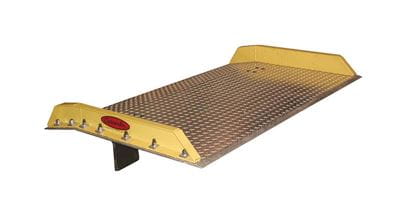
Los Angeles businesses can improve loading dock safety and efficiency while reducing equipment damage by selecting the right dock boards and dock plates for their specific freight handling needs, and Raymond West's material handling experts at (800) 669-5438 can help specify the optimal solution for your operation.
What Actually Happens When You Deploy Dock Boards and Dock Plates in Los Angeles Warehouses
You've approved the purchase order. Now a pallet of aluminum dock plates or a heavy-duty steel dock board arrives at your Los Angeles facility, and your crew looks at you expecting direction. This is where many operations stumble, not in product selection, but in the practicalities of implementation. After seeing dozens of deployments across the Southern California logistics corridor, the gap between buying equipment and successfully integrating it into daily operations becomes obvious.
The First-Week Reality: Common Missteps to Avoid
The most frequent mistake isn't choosing between dock board vs dock plate specifications. It's placing equipment where it's convenient for storage rather than where it'll actually be used. A 200-pound steel dock board stored two dock doors away from where your highest-volume carrier parks gets bypassed when you're racing to turn a trailer in 20 minutes. Position equipment at the doors where it's needed, even if that disrupts your preferred traffic flow. Convenience drives compliance.
Second issue: crew training that stops at "bridge the gap." Your operators need to understand forklift dock plate requirements, not as theory but as muscle memory. Where do the forks engage for safe lifting? How do you verify the plate is seated correctly before driving a 5,000-pound load across it? What does an unsafe gap distance look like? Walk through the process with each shift, not just the day crew.
Understanding Dock Board vs Dock Plate Through Actual Application
The terminology confusion clears up quickly once you match equipment to real workflow. Aluminum dock plates work beautifully for facilities handling e-commerce returns or light parcels with pallet jacks. They're portable dock plate options that one person can reposition as trailer heights vary throughout the day. If you're managing mixed LTL carriers serving the San Pedro Bay port complex, where trailer deck heights shift constantly, aluminum provides the flexibility you need.
Steel dock boards become necessary the moment sit-down forklifts enter the equation. Those raised curbs aren't decorative; they prevent wheels from rolling off during turns or misalignment. For distribution centers moving dense Southern California consumer goods, heavy duty dock boards rated for 15,000 to 20,000 pounds become non-negotiable loading dock safety equipment. The structural integrity handles repetitive forklift impact without flexing.
Aluminum vs Steel Dock Plates: What the Spec Sheet Doesn't Tell You
Weight capacity appears straightforward until you account for Los Angeles heat cycles. Aluminum maintains performance in temperature swings and resists corrosion when afternoon fog rolls in from the coast. Steel dock boards absorb and retain heat, which matters less for performance than for operator comfort when handling equipment in an un-conditioned yard during summer months.
Portability sounds like a minor consideration until your staffing fluctuates. Aluminum dock plates benefits become tangible when you're short a loader and your remaining crew can't safely move a 180-pound steel unit. Conversely, that same portability becomes a liability if equipment walks away or gets borrowed by another department. Know your operational culture before prioritizing weight savings.
Practical Dock Leveling Solutions Comparison for Mixed Fleets
Mobile yard ramp alternatives address some scenarios dock plates can't, but they introduce their own complications. Ramps require space, positioning time, and often a spotter. For facilities in industrial corridors like Vernon or Commerce handling 40-plus trailer exchanges daily, dock boards offer faster transitions. You're trading the versatility of a ramp for speed and simplicity.
Dock plate safety features matter most in high-tempo environments. Non-slip surfaces maintain traction when morning moisture condenses on metal. Beveled edges reduce the jolt as equipment transitions on and off the plate. Yellow striping improves visibility when your yard is backlit by afternoon sun. These aren't luxuries; they're the details that determine whether warehouse loading dock equipment gets used correctly under pressure.
Maintenance and Capacity Verification: The Overlooked Implementation Step
Dock board maintenance tips sound tedious until someone drives a 12,000-pound load across a plate rated for 10,000. Establish a monthly visual inspection: check welds on steel units, verify aluminum surfaces haven't deformed, confirm capacity labels remain legible. As your equipment mix evolves, revisit whether your original dock board weight capacity still matches operational reality. It's a 10-minute task that prevents costly incidents.
Partner With Loading Dock Equipment Suppliers Who've Seen Implementation Challenges
Raymond West works with Los Angeles and broader California operations to select and deploy material handling solutions that function in real-world conditions. Our team understands the difference between specifications and successful adoption, and we'll help you avoid the common implementation gaps that undermine even well-chosen equipment. Let's discuss your specific loading environment and operational tempo to identify the right solution.
Raymond West's Los Angeles facility serves much of Los Angeles County, including Santa Fe Springs, Whittier, La Mirada, Downey, Pico Rivera, Los Angeles, Montebello, El Monte, Rosemead, Alhambra, South Gate, Lynwood, Compton, Westmont, Gardena, Torrance, Carson, San Pedro, La Habra, City of Industry, Walnut, Inglewood, Hawthorne and all surrounding areas.
Raymond West | Los Angeles Material Handling Equipment Supplier
5560 Katella Ave
Cypress, CA 90630
(562) 944-8067
You May Also Like:
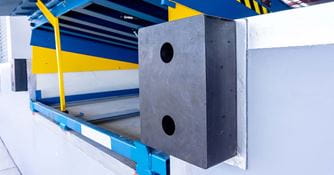
Dock Bumpers
Raymond West supplies and services dock bumpers. We are backed by one of the largest service and parts operations in the state.
Learn More
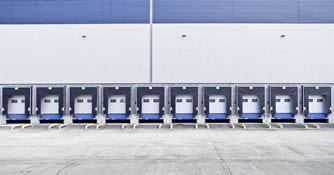
Warehouse Door Repair | Los Angeles
Raymond West offers commercial overhead door service in Los Angeles. Give us a call today at (562) 944-8067.
Learn More
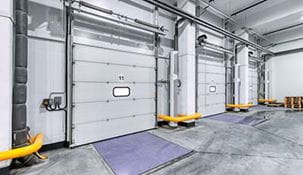
Dock Doors
Raymond West supplies and services commercial overhead doors. We are backed by one of the largest service and parts operations in California.
Learn More

Dock Leveler Repair | Los Angeles, CA
Raymond West is a Los Angeles material handling equipment company, offering repair and service for all brands of dock levelers.
Learn More
Dock Seals
Raymond West supplies and services loading dock seals. We are backed by one of the largest service and parts operations in the region.
Learn More
Dock Shelters
Raymond West supplies and services loading dock shelters. We are backed by one of the largest service and parts operations in the state.
Learn More
