
Warehouse Safety Equipment | Ontario, CA

Warehouse safety equipment in Ontario, CA helps facilities protect workers, reduce liability, and maintain compliance with OSHA standards through proven solutions like rack guards, safety barriers, and floor markings, contact Raymond West at (800) 669-5438 to assess your facility's current safety gaps and identify cost-effective improvements.
Essential Warehouse Safety Equipment for Ontario's Distribution Powerhouse
Ontario sits at the crossroads of the Inland Empire's distribution network, where Interstate 10 and Interstate 15 funnel goods between the Ports of Los Angeles and Long Beach and the rest of North America. With more than 120 million square feet of warehouse space in the region, facilities here operate around the clock, moving high volumes of freight through tight timelines. That pace creates exposure: forklifts weaving through dense pallet rack configurations, workers navigating congested dock areas, and machinery running extended shifts. When proper safety equipment isn't in place, small hazards compound into costly accidents.
For warehouse managers in Ontario, safety isn't just about avoiding citations. It's about sustaining throughput. Downtime from an injury or equipment damage disrupts schedules that often have no slack. Warehouse safety equipment reduces the risk of accidents while keeping operations fluid. The right personal protective equipment and facility-level safeguards help workers stay focused on their tasks instead of second-guessing every forklift pass or pallet stack.
Foundational PPE: Protecting Warehouse Workers from Daily Hazards
Hard hats and helmets are non-negotiable in environments where overhead activity is constant. Falling objects from rack beams, accidental contact during loading, or shifting cargo all pose real threats. Wearing a hard hat reduces head injury severity in situations where visibility and spacing are compromised by volume.
Safety glasses and face shields protect eyes and face from airborne debris, dust, and splash exposure. In warehouses handling consumer goods, electronics, or packaged materials, even routine tasks like cutting banding or opening crates generate particles that can cause injury. For those working near hazardous materials or chemical containers, face shields add a necessary barrier against fumes and splashes.
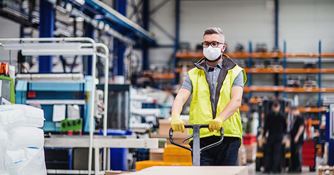
High-visibility vests ensure workers remain visible to forklift operators, especially during shift changes or in areas where natural light is limited. Visibility isn't just about being seen, it's about maintaining spatial awareness in a workspace where heavy machinery and pedestrian traffic intersect constantly.
Proper footwear protects against crush injuries, punctures, and slips. Steel-toed boots withstand pallet drops and contact with moving parts. Slip-resistant soles reduce falls on dock plates, around loading areas, or anywhere spill cleanup isn't immediate. Footwear that can handle the demands of warehouse work is essential safety gear that prevents a range of injuries.
Hearing Protection and Respiratory Safety in High-Activity Facilities
Noise levels in busy distribution centers regularly exceed safe thresholds. Forklift alarms, conveyor systems, pallet jacks, and dock activity create sustained exposure that leads to hearing loss over time. Earplugs or earmuffs provide an inexpensive safeguard without compromising communication when selected appropriately for the environment.
In facilities where dust, fumes, or airborne particulates are present, respiratory protection becomes critical. Proper ventilation helps, but workers operating machinery near loading docks or handling goods with packaging residue need respirators or masks rated for the specific hazard. Prolonged exposure to even low-level contaminants adds up across shifts and seasons.
Facility-Level Safety: Barriers, Signage, and Hazard Management
Warehouse PPE protects individuals. Safety barriers and structural controls protect the entire operation. Guardrails separate pedestrian walkways from active forklift aisles, reducing the risk of injury from accidental contact. Bollards shield pallet rack uprights and building columns from impact damage that could compromise stability or create cascading hazards in high-traffic zones.
Clear signage and reflective floor marking define aisles, staging areas, and flue space around racking systems. Proper equipment placement and OSHA-compliant clearances prevent congestion and support efficient material flow, especially during peak periods when every square foot is in use.
First aid stations should be well-stocked and positioned for quick access. Fire safety equipment, including extinguishers and suppression systems, must be maintained and inspected regularly. Warehouses handling chemicals or cleaning agents need spill containment kits and eyewash stations to address potentially hazardous situations before they escalate.
Matching Safety Gear to Operational Realities
Every warehouse has different risks. Facilities focused on heavy pallet movement prioritize impact protection and high visibility. Operations dealing with consumer electronics or fragile goods may emphasize dust control and static protection. Forklift-intensive environments benefit from proximity alarms, mirrors at blind corners, and designated pedestrian zones.
The essential part of any safety program is matching proper PPE and protective systems to actual exposure. Workers need the right gear for the different tasks they perform, not generic kits that miss critical gaps. A site-specific hazard assessment identifies risks, ensures compliance with safety standards, and avoids both over-purchasing and underprotecting.
Seasonal demand surges in Ontario's warehouses can introduce variables that require adaptive measures. Higher staffing levels during peak shipping periods mean more workers navigating the same space. Temperature swings affect both equipment performance and worker endurance. Addressing these factors proactively helps reduce the risk of workplace hazards and keeps productivity steady.
Partnering for Safety and Performance in Ontario
Sourcing warehouse safety equipment isn't about ticking boxes on a compliance checklist. The right partner understands your facility's layout, the machinery you operate, and the risks your warehouse staff face daily. Raymond West serves warehouse operations throughout Ontario and the broader Inland Empire, offering site assessments, product guidance, and ongoing support to help you equip your team without disrupting workflow.
Protecting your people and maintaining operational flow starts with the proper safety equipment matched to your environment. Contact Raymond West in Ontario to discuss your facility's needs and explore solutions that safeguard both workers and performance.
```Raymond West's Ontario, California facility serves parts of Los Angeles County and San Bernardino County, including Ontario, Fontana, Rancho Cucamonga, Upland, La Verne, San Dimas, Covina, West Covina, Pomona, Diamond Bar, Rowland Heights, Chino, Norco, Eastvale, Corona, Jurupa Valley, San Bernardino, Rialto and all surrounding areas.
Raymond West | Ontario California Material Handling Equipment Supplier
4602 E Brickell St
Ontario, CA 91761
(909) 930-9399
You May Also Like:
Covid 19 Safety Products | Ontario
Raymond West is a California material handling equipment company, offering a full range of warehouse safety products for Covid 19.
Learn More

Fall Protection | Ontario
Prevent warehouse accidents with state-of-the art fall protection solutions from Raymond West.
Learn More
