
Warehouse Safety Equipment | Portland, OR

Warehouse safety equipment from experienced Material Handling Equipment providers in Portland, OR helps operations reduce workplace incidents while improving compliance and productivity, and Raymond West's team can assess your facility's specific needs at (800) 669-5438.
Implementing Effective Warehouse Safety Equipment in Portland, OR
You've seen the incident reports. You know the near-misses that don't make it into the log. And if you've been managing warehouse operations in Portland long enough, you've likely watched a well-intentioned safety program falter because the equipment didn't match the reality on the floor. The Pacific Northwest's mix of port-driven distribution activity, growing e-commerce fulfillment demands, and persistent wet conditions creates a specific set of challenges that generic safety approaches often miss.
Most warehouse safety equipment rollouts fail not because operators chose the wrong PPE, but because they underestimated what implementation actually requires. Hard hats sit unused if they fog up under face shields. High-visibility vests get left in lockers when they're uncomfortable during physical tasks. Hearing protection becomes optional if it interferes with radio communication between forklift operators and dock staff. The gap between purchasing proper safety equipment and ensuring warehouse workers actually use it daily defines the difference between compliance theater and genuine risk reduction.
What Adoption Actually Looks Like
Start with the high-frequency risks. In Portland warehouses handling steady pallet volume from marine terminals and regional distribution networks, impact protection and slip resistance matter more than exotic PPE for hazardous materials. Steel-toed footwear with aggressive tread patterns addresses both crush hazards and the wet walkway conditions common during our prolonged rainy season. That's not a minor detail when you're moving goods through tight aisles near heavy machinery.
Safety glasses need to withstand the environment you're actually working in. If your facility runs cold storage or transitions between temperature zones, you'll need anti-fog coatings that hold up to repeated condensation cycles. Face shields work for splash protection around chemical staging areas, but they create visibility issues in dimly lit rack aisles unless you upgrade lighting simultaneously.
For hearing protection, map your noise levels before ordering. Forklifts, conveyors, and dock doors generate different sound profiles. Earplugs work for steady ambient noise. Earmuffs handle intermittent peaks better. If your operation relies on verbal coordination, consider electronic hearing protection that dampens harmful noise while preserving speech frequencies. It costs more upfront but eliminates the compliance problem where workers remove protection to communicate.
Common Mistakes to Avoid
The biggest error is treating warehouse PPE as a one-time purchase. Equipment wears out. Safety standards evolve. Your operation changes. A facility that added third-shift operations or expanded into hazardous goods handling can't rely on the same baseline gear that worked for day-shift general storage.
Another mistake: ignoring facility-level safety equipment while focusing only on personal protective equipment. Guardrails and safety barriers prevent accidents that no amount of proper PPE can mitigate. Bollards protect pallet rack uprights from forklift impact that could compromise structural integrity across entire bays. Reflective floor marking and clear signage help prevent the risk of accidents by defining traffic patterns before problems develop, not after.
Don't overlook environmental controls. Proper ventilation matters in warehouses handling any materials that produce fumes or dust. Spill containment isn't just for hazardous substances; even non-toxic liquids create slip hazards that proper equipment and quick response protocols must address. Fire suppression systems and accessible, well-stocked first aid stations are essential components that too many operators assume are covered until an incident proves otherwise.
Building a System That Works
Effective warehouse safety starts with matching risks to controls. Conduct a walkthrough during actual operations, not during downtime. Watch how workers move through the space. Identify blind corners where pedestrian barriers or proximity alarms could reduce the risk of injury. Note where lighting creates visibility problems for both human traffic and forklift operators. Check flue space around racking to ensure fire safety equipment can function and that beam accessibility doesn't create overhead hazards.
Portland's position as a logistics hub means your warehouse likely sees variable volume and diverse goods. Seasonal peaks stress both equipment and attention spans. That's when shortcuts happen and workplace hazards multiply. Proper safety equipment needs to support productivity, not hinder it. If wearing a hard hat or using proper footwear slows workers down because the gear is uncomfortable or poorly fitted, compliance drops exactly when accident risk climbs.
Assign accountability. Designate who checks that first aid supplies stay current, that hearing protection gets replaced on schedule, and that damaged PPE is pulled from service immediately. Safety barriers and signage need periodic inspection, especially in high-traffic zones where physical wear degrades effectiveness. In every warehouse, someone must own these tasks, or they become no one's responsibility until OSHA arrives or an accidental injury forces the issue.
Getting Started in Portland
You don't need to overhaul everything at once. Prioritize based on actual exposure. If forklift traffic dominates your risk profile, start with visibility gear, pedestrian separation, and impact protection. If you handle chemicals or operate machinery with moving parts and noise levels that require hearing loss prevention, equip those areas first with appropriate respiratory protection, chemical-resistant gloves, and earmuffs or earplug options workers will actually use.
Work with a partner who understands warehouse work in this region. Raymond West serves operations throughout Portland and knows what challenges local facilities face. A site assessment identifies gaps you might miss and ensures your investment in essential warehouse safety equipment addresses real needs rather than checking generic boxes. The goal isn't perfect compliance on paper. It's a work environment where warehouse staff can complete different tasks safely, efficiently, and without the hidden costs that accidents and risks associated with inadequate protection create over time. Contact Raymond West in Portland to build a safety strategy that fits how your operation actually runs.
```Raymond's Portland service operation includes all of Western Oregon and Southwest Washington, including Portland, Beaverton, Tigard, Hillsboro, Forest Grove, Sherwood, Tualatin, Wilsonville, Oregon City, Gladstone, Clackamas, Milwaukie, Happy Valley, Gresham, Troutdale, Woodburn, Salem, Vancouver, Ridgefield, Longview, Kelso and surrounding areas.
Raymond West | Portland Material Handling Equipment Supplier
3148 NE 181st Ave
Portland, OR 97230
(800) 675-2500
You May Also Like:
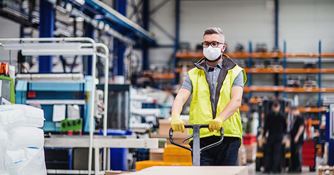
Covid 19 Safety Products
Raymond West is a full service material handling equipment company, offering a wide range of warehouse safety products for Covid 19.
Learn More

Fall Protection | Portland
Prevent warehouse accidents with state-of-the art fall protection solutions from Raymond West.
Learn More
