
Warehouse Safety Equipment | Tucson, AZ

Warehouse safety equipment solutions in Tucson, AZ help facilities reduce workplace injuries, improve OSHA compliance, and protect both personnel and inventory through proven barriers, guardrails, and traffic management systems, contact Raymond West at (800) 669-5438 to assess your facility's current safety gaps and implement effective protective measures.
Warehouse Safety Equipment in Tucson: Meeting New Operational Realities in the Southwest
The warehouse landscape in southern Arizona has shifted considerably over the past five years. E-commerce fulfillment demands faster cycle times, cross-border trade through Nogales has intensified inventory throughput, and labor turnover across the Sun Belt corridor has put pressure on training systems and safety protocols. For operations managers in Tucson, where triple-digit summer temperatures and seasonal workforce fluctuations complicate daily tasks, protecting warehouse workers isn't just about compliance. It's about sustaining operations when margins are thin and risks are high.
Warehouse safety equipment has evolved from a regulatory afterthought to an operational necessity. When implemented with purpose, the right personal protective equipment and facility-level systems reduce the risk of accidents, support productivity, and create a work environment where staff can focus on throughput instead of navigating avoidable workplace hazards.
PPE Fundamentals: Protecting Workers Across Different Tasks
Hard hats and helmets remain essential in any facility with overhead pallet rack systems or material handling equipment. A falling carton or contact with a rack beam can cause serious injury. Wearing a hard hat is basic protection that every warehouse should enforce.
Eye protection is equally critical. Safety glasses shield against dust, debris, and accidental splash from cleaning agents or hazardous materials. In areas where grinding, cutting, or chemical handling occurs, face shields provide broader coverage for eyes and face. These items are inexpensive but prevent injuries that can sideline workers for days or weeks.
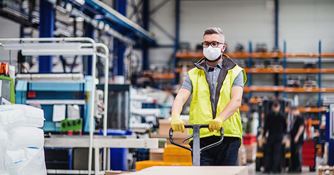
High-visibility vests ensure forklift operators and others operating machinery can see workers in dimly lit areas of your warehouse or during early-morning shifts. Visibility becomes even more important in facilities with congested aisles or mixed pedestrian and equipment traffic.
Proper footwear protects against crush injuries from pallet drops, punctures from stray hardware, and slip hazards on concrete floors. Steel-toed, slip-resistant boots are must-have items for warehouse staff handling heavy loads or working near forklifts and other heavy machinery.
Hearing and Respiratory Protection: Addressing Long-Term Exposure
Sustained noise levels from conveyors, dock equipment, and forklift alarms can lead to hearing loss over time. Earplugs or earmuffs offer straightforward protection without interfering with communication when selected properly. Hearing protection is often overlooked but represents an essential part of any comprehensive safety program.
In Tucson's arid climate, dust and airborne particulates are common concerns, especially in facilities with older ventilation systems or open loading bays. Prolonged exposure to fume from battery charging stations or chemical storage areas requires respiratory protection. Matching proper PPE to the specific hazard ensures workers need to stay safe without unnecessary restrictions on their movement or comfort.
Facility-Level Safety Equipment: Barriers, Signage, and Fire Systems
Warehouse PPE protects individuals. Structural safety systems protect the workspace itself. Safety barriers and guardrails separate pedestrian walkways from active forklift zones, reducing the risk of injury from contact with moving equipment. Bollards positioned around pallet rack uprights and building columns prevent impact damage that could compromise structural integrity or create dangerous conditions in high-traffic areas.
Clear signage designates hazard zones, fire exits, and restricted areas. Reflective floor marking defines aisles, staging zones, and flue space around racking, which supports both safety standards and efficient material flow. In facilities with multiple shifts or seasonal workers, visible cues help new staff navigate the environment safely.
Fire safety equipment, including extinguishers and suppression systems, must be accessible and regularly inspected. First aid stations should be well-stocked and positioned where they can be reached quickly. In warehouses handling chemicals, spill containment kits and proper ventilation systems help prevent escalation of potentially hazardous situations.
Matching Safety Systems to Tucson's Operational Realities
Every warehouse faces different risks. A distribution center focused on high-volume pallet movement prioritizes impact protection, barrier systems, and visibility. Facilities storing or handling hazardous substances require chemical-resistant gloves, eyewash stations, and compliant storage procedures. Forklift-intensive operations benefit from proximity alarms, mirrors at blind corners, and well-marked pedestrian zones.
Tucson's extreme summer heat introduces additional variables. Workers operating forklifts or moving loads in non-climate-controlled areas face fatigue and dehydration risks that can increase the risk of accidents. Proper equipment includes not only PPE but also hydration stations, cooling vests, and adjusted work schedules during peak temperature periods. Addressing these seasonal factors proactively helps safeguard both people and performance.
Conducting a site-specific hazard assessment identifies gaps in your current setup and ensures you're equipping warehouse staff with the proper safety equipment for the tasks they actually perform. This approach avoids both underprotection and wasted spend on unnecessary gear.
Building a Sustainable Safety Program
Essential warehouse safety equipment isn't a one-time purchase. It's an evolving system that adapts to changing conditions, workforce turnover, and operational demands. The right local partner understands how facilities in southern Arizona operate, what risks are common, and how to help warehouse managers make informed decisions without disrupting workflow.
Raymond West serves operations throughout Tucson and the surrounding region, offering site assessments, product guidance, and ongoing support to help you build a compliant, effective safety program. Protecting your team and your operation starts with the proper ppe and facility systems that match your environment. Contact Raymond West in Tucson to discuss your warehouse's needs and explore solutions that keep workers safe and operations running.
```Raymond West's Tucson facility serves Pima County, including Tucson, South Tucson, Marana, Oro Valley, Sahuarita and surrounding areas
Raymond West | Tucson Material Handling Equipment Supplier
3951 E Michigan St #175
Tucson, AZ 85714
(520) 729-4222
You May Also Like:
Covid 19 Safety Products | Tucson
Raymond West is an Arizona material handling equipment company, offering a full range of warehouse safety products for Covid 19.
Learn More

Fall Protection | Tucson
Prevent warehouse accidents with state-of-the art fall protection solutions from Raymond West.
Learn More
